The freight industry is buzzing about artificial intelligence. Every software vendor promises faster quotes, smarter routing, automated decisions. But here’s the reality: AI only works when it has clean, centralized data to analyze. If your freight operation is split across multiple platforms, spreadsheets, and manual processes, AI becomes a tool that accelerates chaos rather than solving it. Research from major consulting firms shows that logistics companies consolidating operations into unified systems improve efficiency by up to 30 percent. This foundational efficiency matters because AI amplifies what’s already there. Fragmented data plus AI equals fragmented automation. Centralized data plus AI equals real transformation.
Most freight forwarders waste 2-3 hours daily moving information between disconnected systems. Pricing data lives in one platform. Operations workflows in another. Billing information in a third. When you layer AI onto this fragmented foundation, you’re teaching the AI to work around the same problems your team is already struggling with. What you actually need is a centralized system first. One unified platform where rate data, operational workflows, billing, and customer information all live together and connect seamlessly. Then AI can do what it’s designed to do: find patterns, automate repetition, and accelerate what already works. This is the difference between AI that creates confusion and AI that creates efficiency.
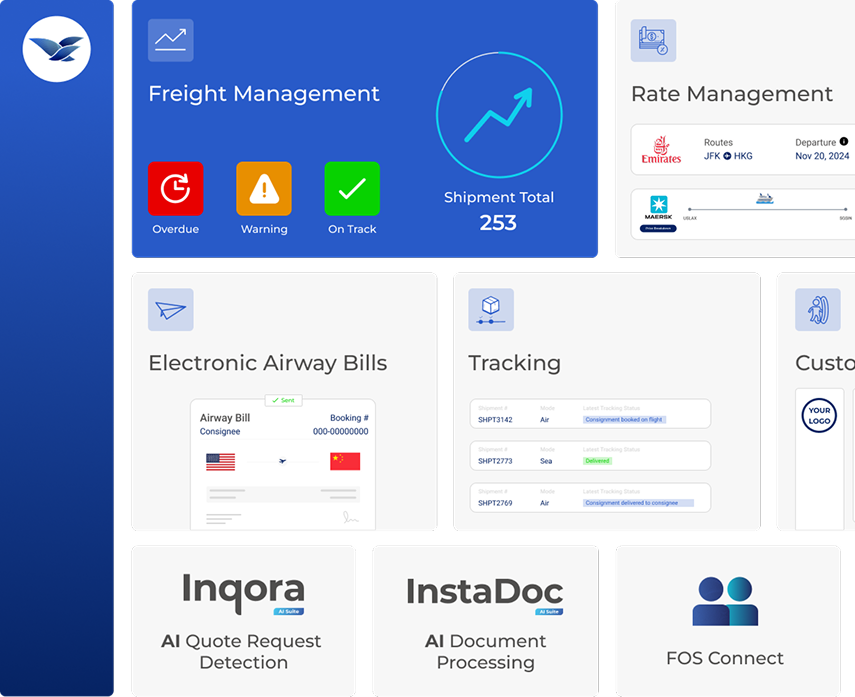
FREIGHTOSCOPE approaches this correctly. The platform is built as a centralized freight management system where pricing, operations, billing, tracking, and accounting all connect in one place. Inqora AI sits inside this unified foundation, automatically detecting incoming quote requests and creating jobs directly in your pricing module. InstaDoc AI processes documents intelligently within the same connected system. Because the data is centralized, the AI operates on clean information. No manual handoffs. No data translation between disconnected systems. Your team gets faster quotes, accurate document processing, and reduced operational errors. That’s AI working the way it’s supposed to: amplifying an already-solid foundation, not trying to fix a broken one.