Running freight operations on multiple disconnected systems is like managing a shipment with five different tracking numbers. Your team wastes hours moving data between platforms, creating duplicate entries, and reconciling information that should be unified. According to McKinsey & Company’s report on Digital Transformation, logistics companies that consolidate operations into centralized systems improve efficiency by as much as 30 percent.¹ Yet most freight forwarders continue juggling rate management tools, accounting software, billing platforms, and tracking systems separately. This fragmentation doesn’t just slow operations. It introduces errors, delays customer response times, and costs money on software subscriptions that don’t talk to each other.
Running freight operations on multiple disconnected systems is like managing a shipment with five different tracking numbers. Your team wastes hours moving data between platforms, creating duplicate entries, and reconciling information that should be unified. According to McKinsey & Company’s report on Digital Transformation, logistics companies that consolidate operations into centralized systems improve efficiency by as much as 30 percent.¹ Yet most freight forwarders continue juggling rate management tools, accounting software, billing platforms, and tracking systems separately. This fragmentation doesn’t just slow operations. It introduces errors, delays customer response times, and costs money on software subscriptions that don’t talk to each other.
A centralized freight management system eliminates these pain points by running every part of your operation from one place. From pricing and quoting to accounting, billing, and tracking, a unified platform means your team enters data once and it flows automatically across all workflows. No more manual transfers between systems. No more duplicate work. No more reconciliation delays. According to the International Air Transport Association (IATA), integrated solutions reduce manual paperwork and accelerate cargo processing throughout the supply chain.² When pricing teams, operations managers, and accountants all work from the same system, information moves in real-time. Customers get faster quotes. Accounting gets accurate data instantly. Operations teams spend less time on data management and more time growing the business.
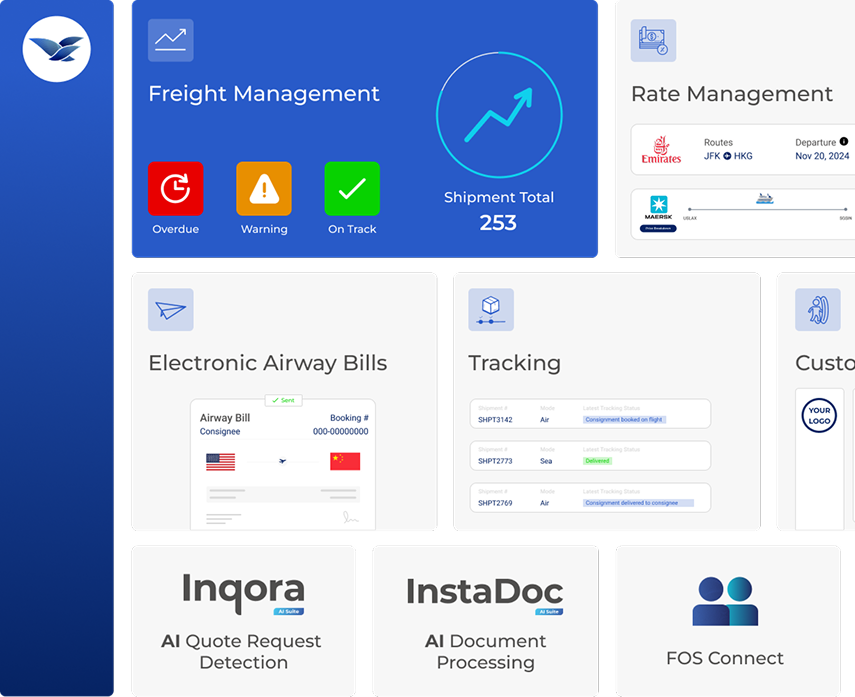
The real cost of multiple systems isn’t just the software fees. It’s the hours your team loses, the errors that slip through, and the growth you can’t achieve because everyone’s buried in manual work. That’s why freight forwarders are switching to FREIGHTOSCOPE. Unlike legacy systems that require months of painful implementation, FREIGHTOSCOPE goes live in days. Your team keeps working while we set everything up. No shutdowns. No chaos. The platform integrates seamlessly with your existing accounting software like QuickBooks, so you’re not rebuilding your entire workflow. Everything you need is centralized in one place: freight management, pricing, operations, billing, tracking, and electronic airway bills. Real forwarders see immediate improvements. One team member reported they went from spending 2-3 hours a day moving data between systems to having it flow automatically. That’s time they got back to actually grow their business.
What makes FREIGHTOSCOPE different isn’t just the technology. It’s the partnership. We don’t disappear after implementation. We listen to your team, understand your specific challenges, and continuously improve based on what you need. Freight forwarders who switch experience faster quote turnaround times, cleaner accounting workflows, and teams that finally have bandwidth to scale. Your competitors might already be centralized. The question isn’t whether you need this change. It’s how long you can afford to wait.