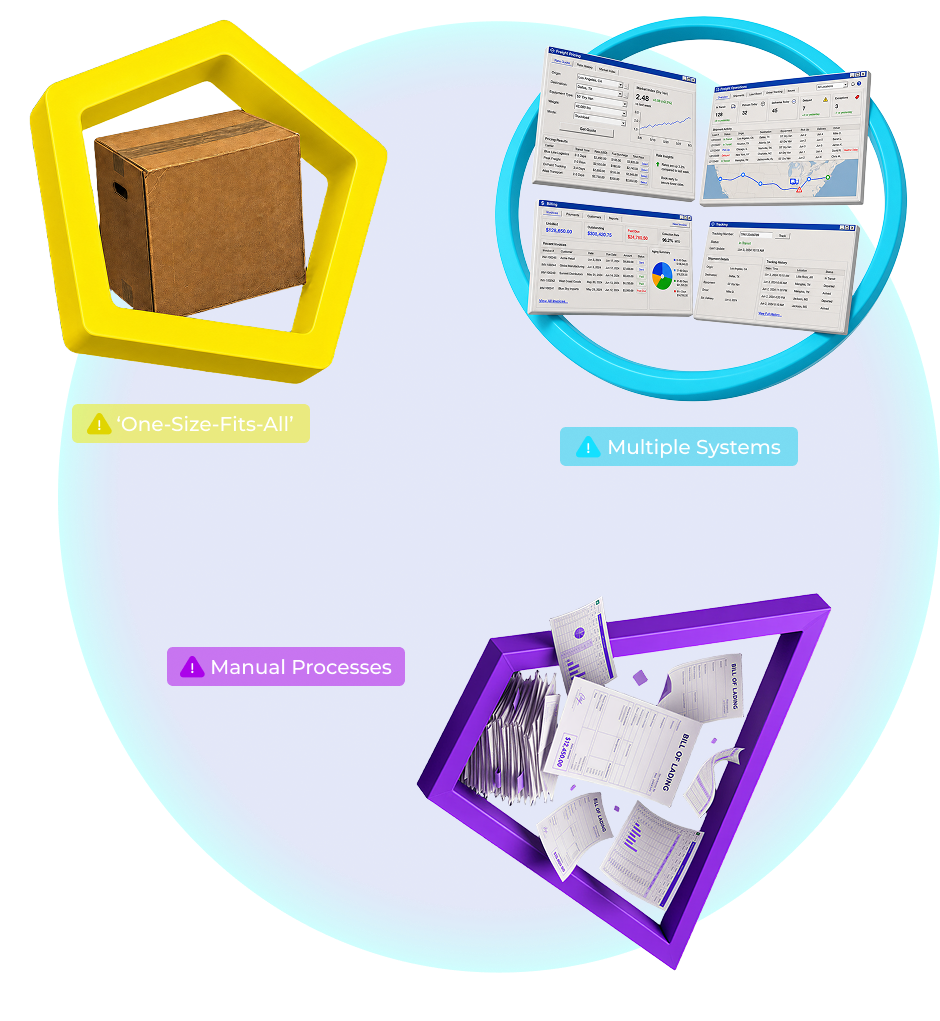
Manual processes are bleeding freight forwarders dry. Even companies using freight management software often find themselves reaching for spreadsheets anyway, duplicating work and creating new problems in the process. A 2023 survey by Gartner found that 68% of logistics companies still rely heavily on manual data entry, despite having management systems in place. The gap exists because many legacy systems require workarounds. Pricing teams work in spreadsheets to do quick calculations. Operations teams use Excel to track exceptions. Accounting departments manually reconcile data because the system doesn’t talk to their accounting software. What started as temporary solutions become permanent fixtures, and your operation gets stuck between two systems instead of one.
The cost of this hybrid approach is significant. Teams spend 2-3 hours daily moving information between systems, creating errors that cascade through operations. Customer quotes take longer. Billing accuracy suffers. Growth stalls because your best people are managing data instead of growing the business. According to research from McKinsey & Company, logistics companies that eliminate manual processes and centralize operations improve efficiency by up to 30%.¹
This is exactly what FREIGHTOSCOPE solves. Unlike legacy systems that force you to choose between their clunky interface or Excel, FREIGHTOSCOPE is built as a true centralized freight management system. Pricing teams quote in the platform. Operations teams manage shipments in the platform. Accounting integrates seamlessly with QuickBooks. Everything flows automatically. One team at a freight forwarding company reported going from 2.5 hours of daily manual work to zero. That’s 12.5 hours per week reclaimed. The difference? A system designed around how freight actually works, not how software vendors think it should work.
FREIGHTOSCOPE handles the full Quote-Book-Ship-Bill workflow in one place. Pricing, operations, billing, tracking, electronic airway bills, and accounting integration all talk to each other automatically. No spreadsheets. No manual transfers. No reconciliation headaches. Forwarders who switch stop living in two systems and start operating like a modern freight company.