
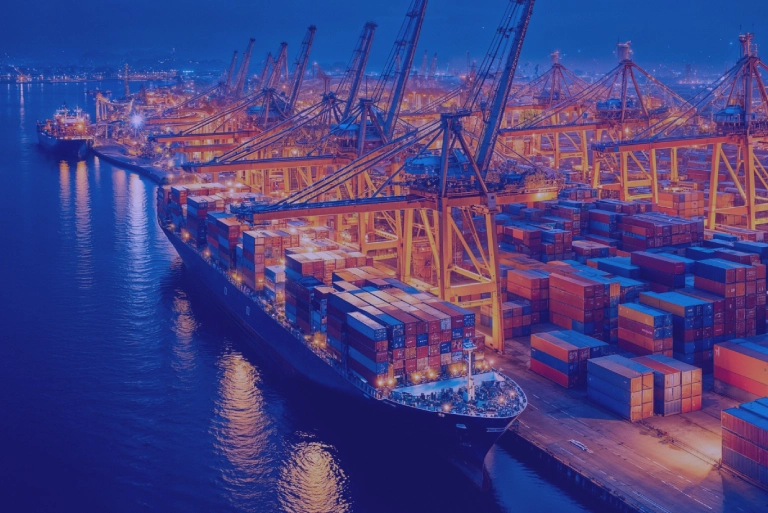

What Is AI Freight Management Software?
What Is AI Freight Management Software?
Freight forwarding is becoming increasingly complex. Customers expect faster responses, shipment visibility, accurate documentation, and seamless communication. At the same time, freight forwarders must manage multiple carriers, documentation requirements, pricing updates, customs processes, and customer requests—often using several disconnected systems.
AI freight management software addresses these challenges by combining artificial intelligence with a modern freight management platform.
Instead of relying solely on manual processes, AI assists teams by automating repetitive tasks, extracting information from documents, organizing workflows, and supporting faster decision-making.
Unlike standalone AI tools, AI freight management software is built into the operational platform, allowing businesses to manage quotes, shipments, documentation, billing, and customer interactions from one centralized system.
Why Freight Forwarders Need AI
Many freight forwarders still spend a significant portion of their day on manual administrative work, such as:
- Reading hundreds of customer emails
- Copying shipment details into different systems
- Entering information from Air Waybills and Bills of Lading
- Preparing quotations manually
- Updating shipment statuses
- Coordinating with multiple departments
- Following up with customers
These repetitive tasks consume valuable time that could be spent serving customers, growing the business, or improving operations.
AI helps reduce this workload by automating routine activities while keeping freight professionals in control of operational decisions.
How AI Freight Management Software Works
AI freight management software uses technologies such as machine learning, natural language processing (NLP), and intelligent automation to assist freight teams throughout the shipment lifecycle.
For example:
Email Intelligence
The software can identify quote requests from incoming emails, categorize them, and direct them to the appropriate workflow. This helps sales teams prioritize opportunities and respond more quickly.
Document Processing
AI extracts key information from documents such as:
- Air Waybills (AWB)
- Bills of Lading (B/L)
- Commercial Invoices
- Packing Lists
- Delivery Orders
- Customs Documents
Instead of manually entering data, teams can review and validate information extracted automatically.
Workflow Automation
Routine processes—such as creating shipment records, assigning tasks, sending notifications, or updating shipment statuses—can be automated to reduce repetitive work and improve consistency.
Operational Insights
By analyzing operational data, AI can help identify trends, highlight bottlenecks, and provide actionable insights that support better planning and resource allocation.
Core Features of AI Freight Management Software
1. Intelligent Quote Management
Responding quickly to customer inquiries is critical in freight forwarding. AI can detect quote requests, organize them, and help teams respond faster.
Benefits include:
- Reduced response times
- Better opportunity management
- Improved customer experience
2. AI-Powered Document Processing
Freight operations rely on a large volume of documents. AI document processing reduces manual data entry by extracting relevant information from shipping documents.
This helps improve:
- Accuracy
- Processing speed
- Operational efficiency
3. Workflow Automation
AI automates repetitive operational tasks, including:
- Shipment creation
- Task assignment
- Status updates
- Customer notifications
- Internal approvals
Automation helps standardize processes while reducing administrative effort.
4. Shipment Visibility
AI supports real-time shipment tracking by consolidating shipment information into a centralized dashboard.
Benefits include:
- Faster customer updates
- Improved operational visibility
- Better coordination across teams
5. Centralized Operations
Rather than using multiple disconnected applications, freight forwarders can manage quoting, documentation, shipment execution, billing, and reporting from one integrated platform.
This reduces duplication of work and minimizes the risk of inconsistent data.
Benefits of AI Freight Management Software
Increased Operational Efficiency
By automating repetitive tasks, teams can process more shipments without proportionally increasing staff.
Faster Customer Response
AI helps prioritize customer requests and supports quicker responses, improving customer satisfaction.
Reduced Manual Errors
Automated data extraction and workflow automation minimize mistakes caused by manual entry.
Better Team Productivity
Employees spend less time on administrative work and more time on customer relationships, sales, and strategic activities.
Improved Decision-Making
Operational dashboards and AI-generated insights help managers identify trends and make informed decisions.
AI vs Traditional Freight Management Software
Feature | Traditional Software | AI Freight Management Software |
Manual Data Entry | Extensive | Significantly Reduced |
Document Processing | Manual | AI-Assisted |
Email Handling | Manual | Intelligent Detection |
Workflow Automation | Limited | Advanced |
Operational Insights | Basic Reports | AI-Driven Analytics |
Scalability | Moderate | High |
Productivity | Depends on Manual Work | Enhanced Through Automation |
Traditional freight management systems help organize operations, but AI-powered platforms go further by automating repetitive work and supporting smarter decision-making.
Common Misconceptions About AI Freight Management Software
“AI Will Replace Freight Forwarders”
This is one of the biggest misconceptions. AI is designed to support freight professionals—not replace them. Tasks like customer relationship management, negotiations, exception handling, and strategic planning still require human expertise.
“AI Is Only for Large Companies”
Modern AI solutions are increasingly accessible to small and mid-sized freight forwarders. Cloud-based platforms allow businesses to adopt AI without significant infrastructure investments.
“AI Can Solve Every Operational Problem”
AI is most effective when combined with well-defined workflows and reliable data. It enhances operations but cannot compensate for poorly designed processes or disconnected systems.
How to Choose the Right AI Freight Management Software
When evaluating solutions, consider whether the platform offers:
- Integrated freight management capabilities
- AI-assisted document processing
- Workflow automation
- Shipment visibility
- Secure cloud infrastructure
- Easy scalability
- Custom integrations
- Reliable customer support
- User-friendly interface
Choosing software that combines AI with core freight operations can simplify implementation and maximize long-term value.
Why FREIGHTOSCOPE Combines AI with Freight Management
FREIGHTOSCOPE integrates AI capabilities into a comprehensive freight management platform rather than treating AI as a standalone feature.
The platform supports freight forwarders by combining:
- Freight Management System (FMS)
- Rate Management System (RMS)
- AI-powered quote request detection
- AI document processing
- Shipment tracking
- Workflow automation
- Billing and invoicing
- Reporting and analytics
This integrated approach helps reduce manual work while providing a unified operational environment.
Frequently Asked Questions
What is AI freight management software?
AI freight management software combines artificial intelligence with freight management tools to automate tasks such as quoting, document processing, shipment management, and workflow automation.
How does AI improve freight forwarding?
AI helps reduce manual work, improve response times, streamline document handling, and provide operational insights that support better decision-making.
Is AI freight management software suitable for small freight forwarders?
Yes. Many cloud-based platforms are designed to help small and growing freight forwarding businesses improve efficiency without large upfront investments.
Can AI replace freight forwarding professionals?
No. AI assists with repetitive and data-intensive tasks while human expertise remains essential for customer service, problem-solving, and strategic decision-making.
What features should I look for in AI freight management software?
Look for automation, document processing, shipment tracking, integrated workflows, scalability, security, and strong customer support.
Conclusion
AI freight management software is reshaping how freight forwarders operate by reducing manual effort, improving accuracy, and streamlining everyday workflows. Rather than replacing experienced professionals, AI enhances productivity and enables teams to focus on delivering exceptional customer service and growing their business.
For organizations seeking to modernize operations, the greatest value comes from choosing a platform that combines AI capabilities with a complete freight management system. By integrating automation, document processing, shipment visibility, and workflow management into a single solution, freight forwarders can build a more efficient, scalable, and customer-focused operation.